ABOUT US
The Theresienstadt Centre for Genocide Studies is a long-term educational and awarenessraising project carried out by the Archaeology of Evil Research Centre – an independent, multidisciplinary, and nonprofit organization founded in 2011 with the aim of preventing antisemitism, extremism, genocide denial, and other forms of historical distortion.
OUR MISSION
Our mission is to support research and education focused on the causes, origins, and consequences of genocide, ethnic cleansing, and mass violence throughout human history. We educate young people about the history of the Holocaust, other genocides, and the tragic consequences of hateful policies. We equip citizens with the tools to understand how, when, and why genocides occur, and how to prevent them through political action. Since 2012, we have been active in Central Europe—specifically the Czech Republic, Slovakia, and Poland. We collaborate with a wide range of international partners and globally recognized experts in political science, psychology, sociology, law, history, education, economics, archival science, and journalism.
OUR HEADQUARTERS
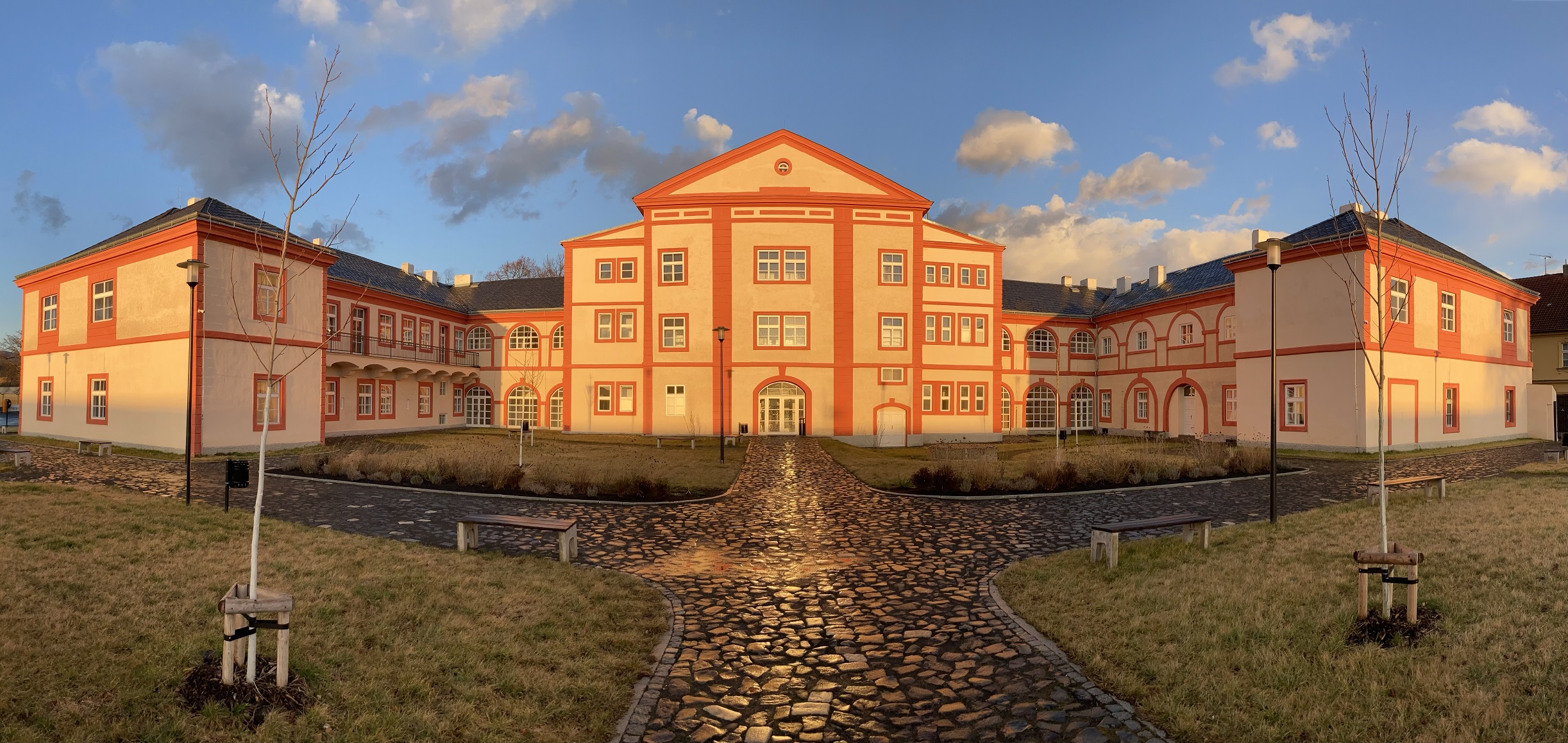
Since 2017, we have been based in the former Jewish ghetto and transit camp within the Terezín (Theresienstadt) Main Fortress—the most significant Holocaust memorial site in the Czech Republic.
The haunting buildings of the ghetto were formed from the military complex completed during the reign of former Austro-Hungarian Emperor Franz Joseph II. A jewel of Habsburgian architecture and site at the centre of much recent Central European history, including the Holocaust, Jews and other inmates were also housed and tormented in parts of what is today the provincial city of Terezin, ca. 60 kilometres north-west of Prague.
We strive to preserve the monuments and buildings of the former ghetto as a permanent reminder of the Holocaust and to honor the dignity of its victims. We currently provide educational services in the completely renovated, historic Wieser House, which we saved from demolition in cooperation with the City of Terezín.
The Wieser House hosts a permanent public exhibition titled Crime Without a Name, which explores the history of major genocidal violence in the 20th century, alongside various temporary exhibitions. We also organize educational programs for elementary and high school students, as well as the general public.
OUR ACTIVITIES

Over the past 14 years, we have trained more than 70,000 Central European citizens of all ages. We have introduced them to the forgotten history of the regional Jewish population, the causes and consequences of the Holocaust and other genocides, and ways to prevent genocidal policies both today and in the future.
The Centre began its activities in the field of genocide studies with the organization of the academic conference „Mountains of Moses: Revolt, Resistance and Rescue of Victims of Mass Extermination in the 20th Century“. Hosted by the Protestant Theological Faculty of the Charles University in Prague in June 2012, the conference introduced the methods and contemporary trends in genocide studies and featured academic papers given by internationally recognized experts in genocide research from United States, China, Sweden, Germany, Spain and Poland. It received considerable media attention in the Czech Republic and abroad.
Among our most successful projects are cultural and educational trains dedicated to the history of the Holocaust and genocides (the Lustig Train and the Lemkin Train), the launch of the first university course on genocide studies in the Czech Republic, dozens of exhibition projects and cultural events, and the organization of the annual Terezín Football League Memorial.
We are part of the international TRACE platform fighting against antisemitism and antigypsyism sentiment, and we contribute to the development of a system for monitoring antisemitic and anitigypsyist incidents.
Permanent Exhibition „Crime Without a Name“
Languages: Czech, English, German
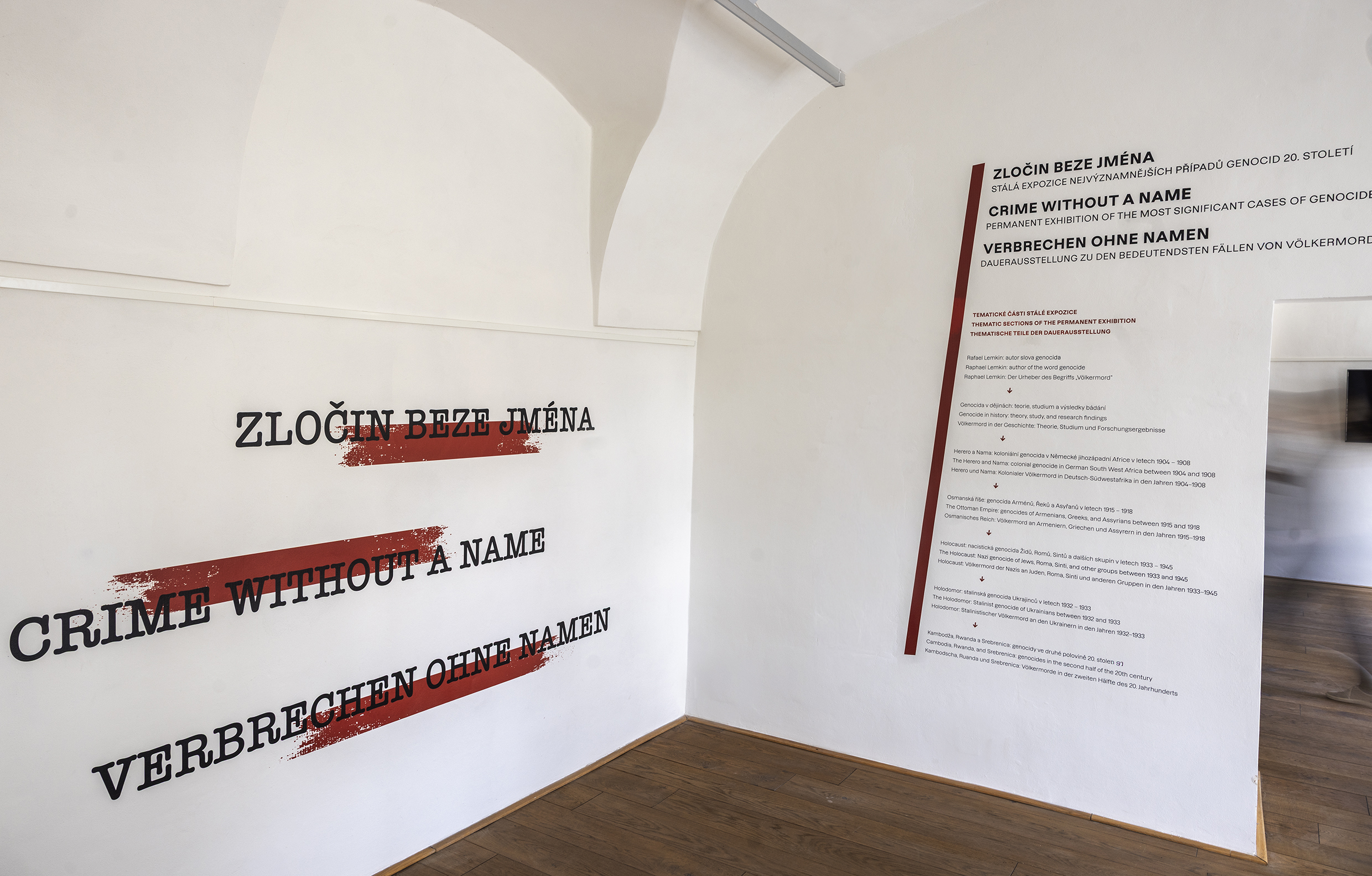
The multimedia project „Crime Without a Name“ provides a comprehensive overview of the major genocides of the 20th century and links them to the story of the Polish-Jewish lawyer Raphael Lemkin, the coiner of the term “genocide.”
The exhibition is located in eight rooms of the Wieser House in the Main Fortress of Terezín and is based on a combination of historical narrative with audiovisual and artistic elements. The international team of creators drew on critical research in the field of genocide studies and modern trends in exhibition design. The theme of genocide is presented through visual and audio art installations, with dramatic works also playing a significant role.
The exhibition’s title refers to a statement by British Prime Minister Winston Churchill, who during World War II described the systematic extermination of the civilian population as a crime for which no legal term existed at the time. Churchill’s original words from a 1941 radio address are heard in the exhibition’s introductory room through a period radio receiver, serving as a reminder that it was the horrors of World War II that gave rise to the need for a new legal definition of mass violence.
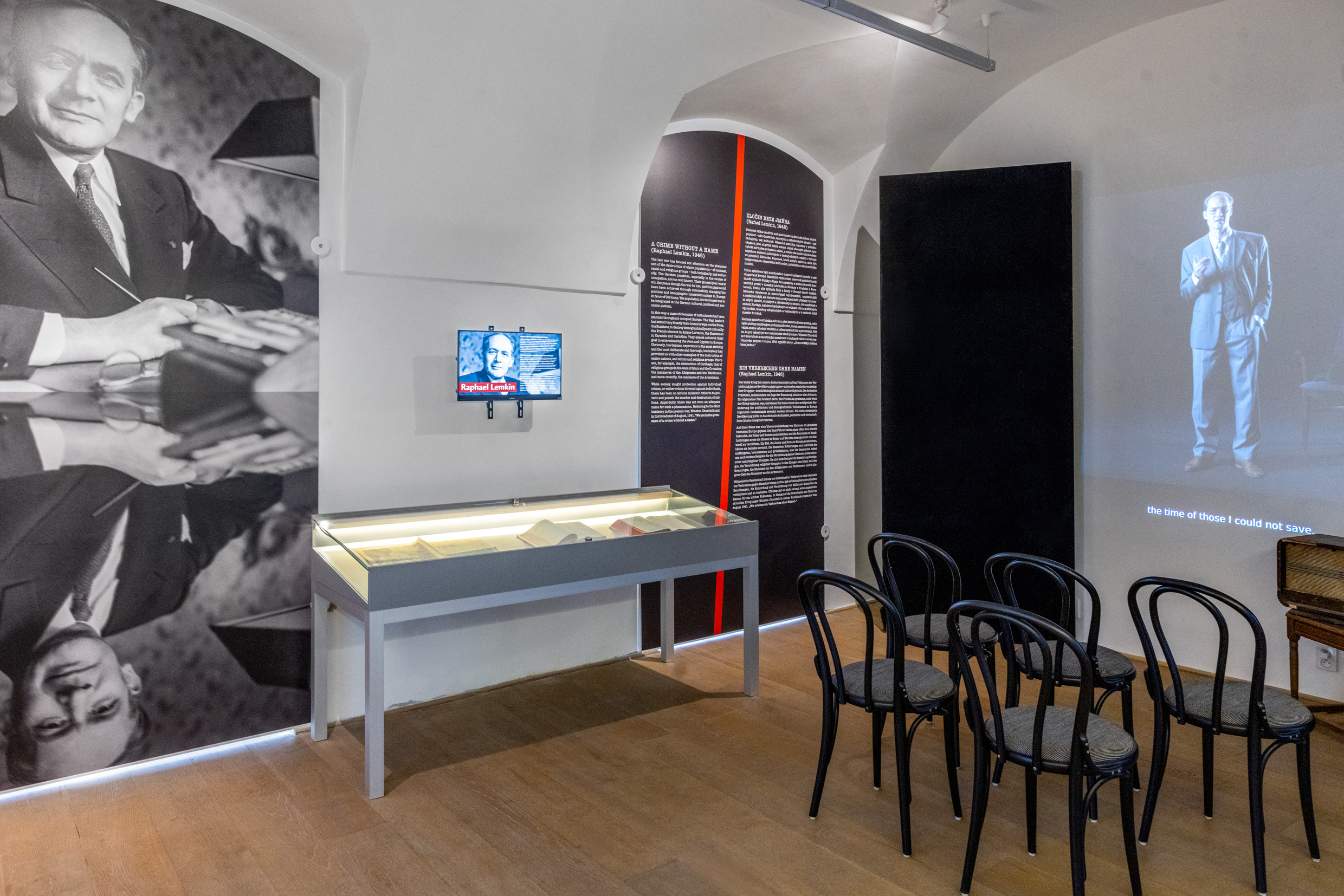
The term was introduced in 1944 by Raphael Lemkin, a lawyer of Polish-Jewish descent who escaped the Holocaust by fleeing to the United States. He introduced the new legal concept of genocide in his book The Axis Powers’ Rule in Occupied Europe, the first edition of which is one of the artifacts in the exhibition. Four years later, Lemkin established the term “genocide” in international law and laid the groundwork for the systematic study of genocidal acts in human history. The results of the research and comparative studies featured in the exhibition „Crime Without a Name“ are presented in a separate section focused on the general mechanisms of genocidal violence and the theme of the concealment and denial of crimes, symbolized by the art installation “Wall of Books” by Michal Pěchouček, recipient of the Jindřich Chalupecký Award.
The exhibition „Crime Without a Name“ presents the most significant cases of genocide in the 20th century:
- the colonial genocide of the Herero and Nama peoples in the early 20th century,
- the genocide of Armenians, Greeks, and Assyrians during World War I,
- the genocide of Jews, Roma, Sinti, and other groups committed by the Nazi regime,
- the Stalinist famine in Ukraine, and
- the genocides of the second half of the 20th century in Cambodia, Rwanda, and Bosnia and Herzegovina.
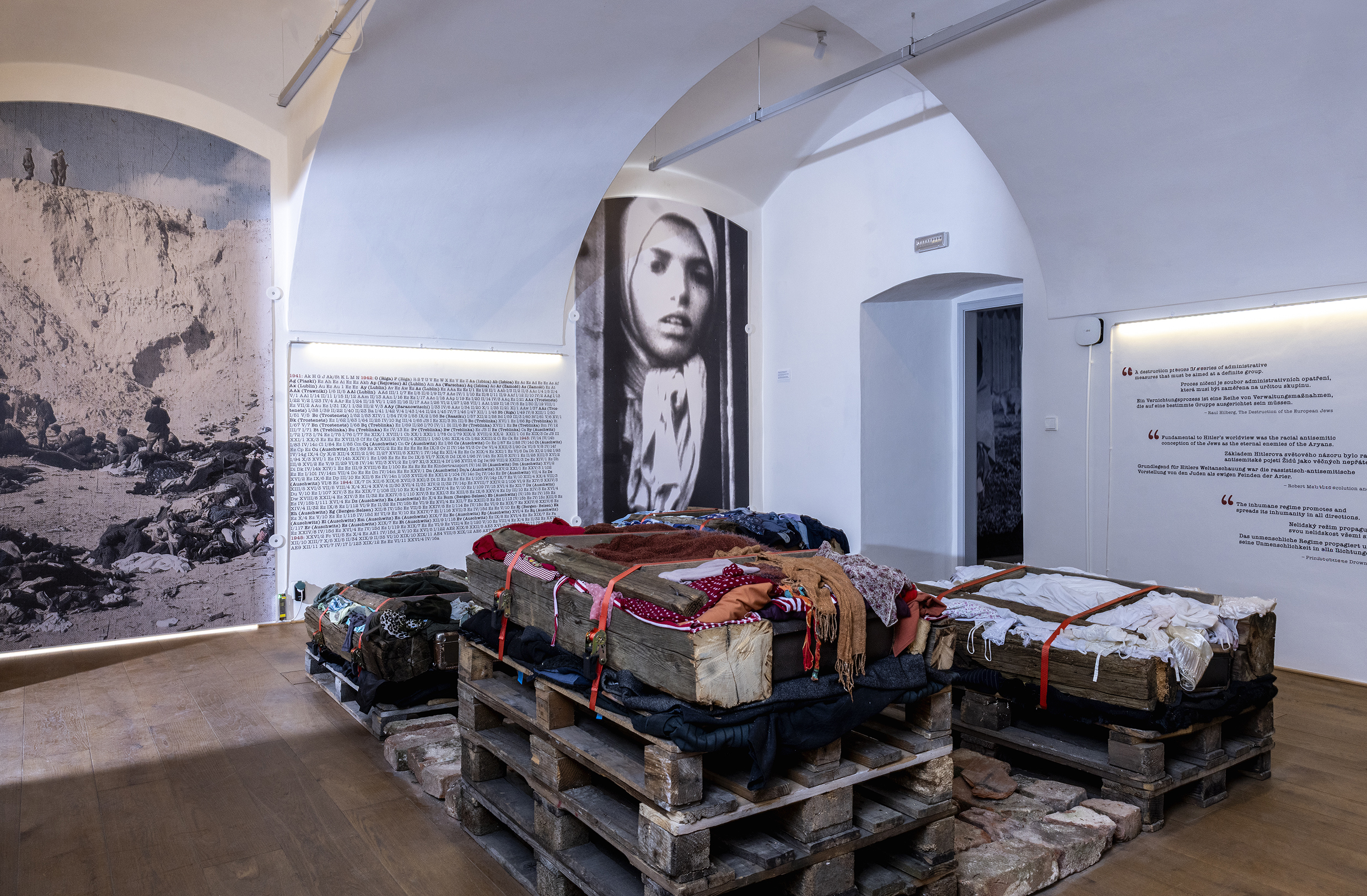
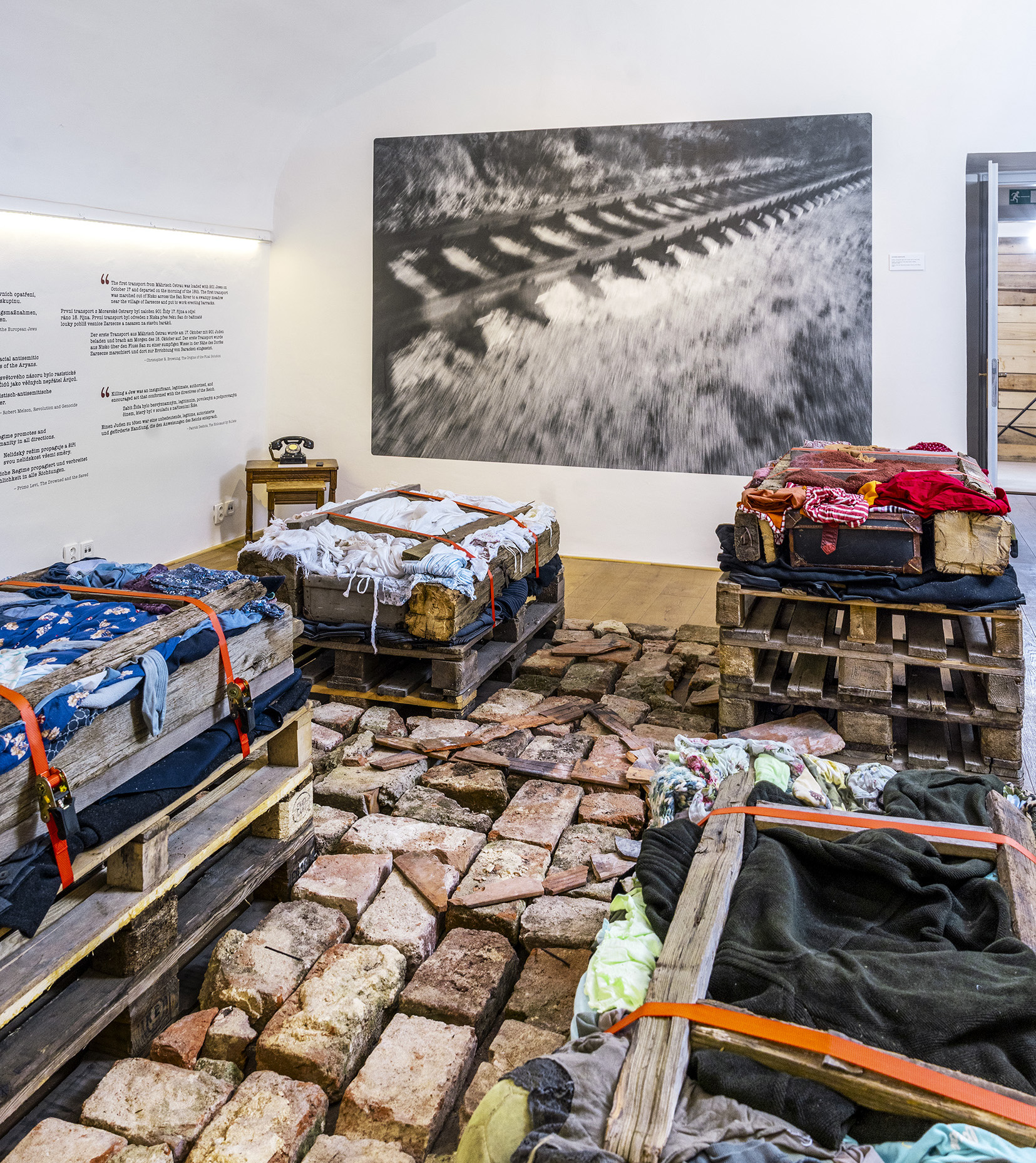
For each tragic episode in modern history, visitors are provided with information on the context, causes, course, and consequences of the individual cases. Visitors can thus compare how these cases are similar, but also how they are unique. The exhibition includes a series of artistic and scenographic installations designed to evoke visitors’ emotions. These include, for example, the installation of “transport packages” by Michal Pěchouček, Antonín Kratochvíl’s large-format photograph “Sobibor” from 2009, depicting the deportation track at the former extermination camp in Sobibor, and Roman Štětina’s audio installation exploring the bureaucratic and industrial nature of genocide.
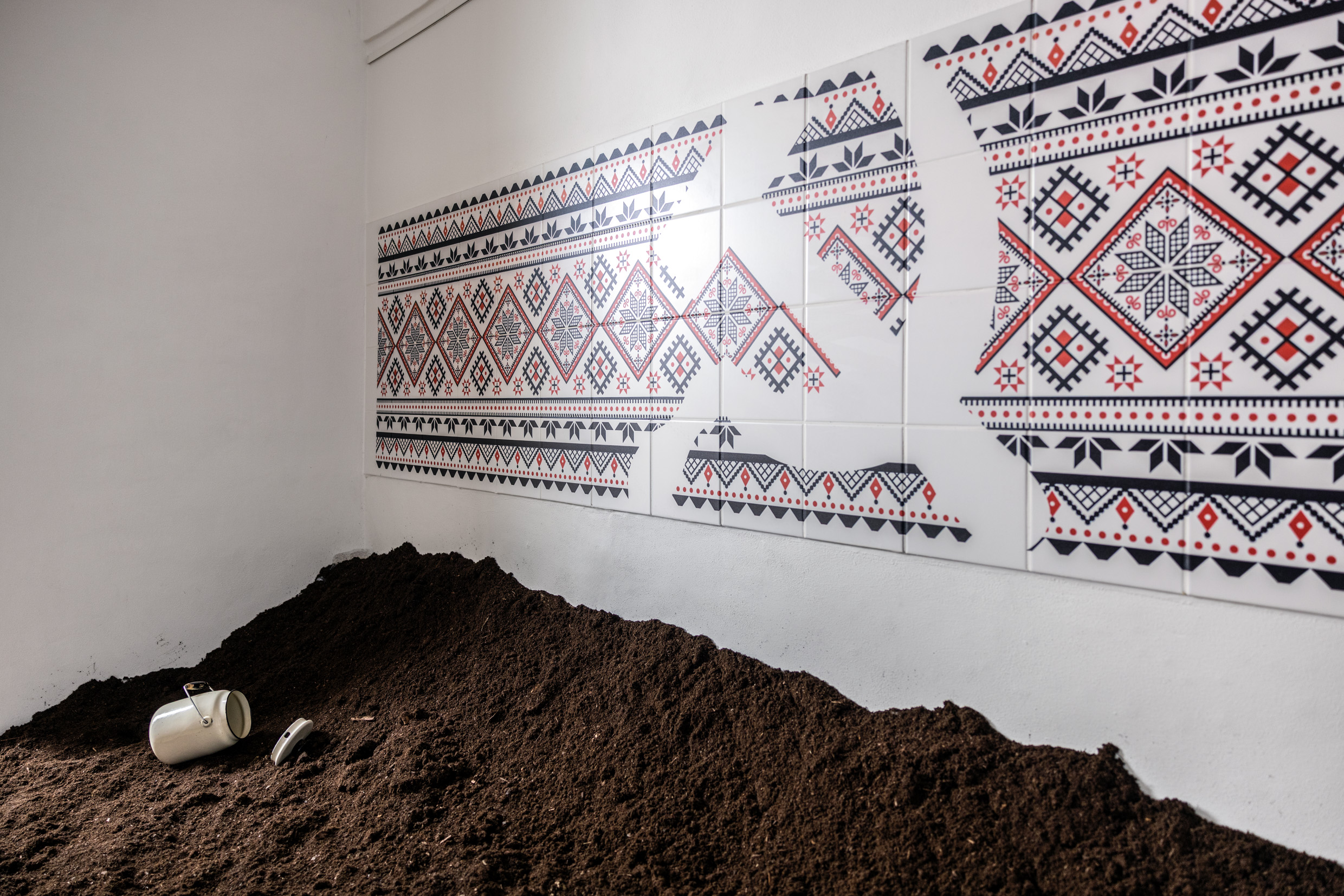
Dramatic performances are also an important part of the exhibition. The exhibition „Crime Without a Name“ features two dramatic characters: Raphael Lemkin, portrayed by Aleš Bílík, and Aurora Mardiganian, portrayed by Veronika Soumarová. The story of Aurora Mardiganian, a survivor of the Armenian Genocide, whose memoirs served as the basis for the very first film about genocidal violence in the history of cinema, unfolds against the backdrop of a period movie theater. The exhibition also makes use of natural materials, whether it is black soil in the installation on the famine in Ukraine or sand in which a dry, dead tree is symbolically planted. This complements the final presentation of film and news footage of genocides from the second half of the 20th century.
Temporary Exhibitions
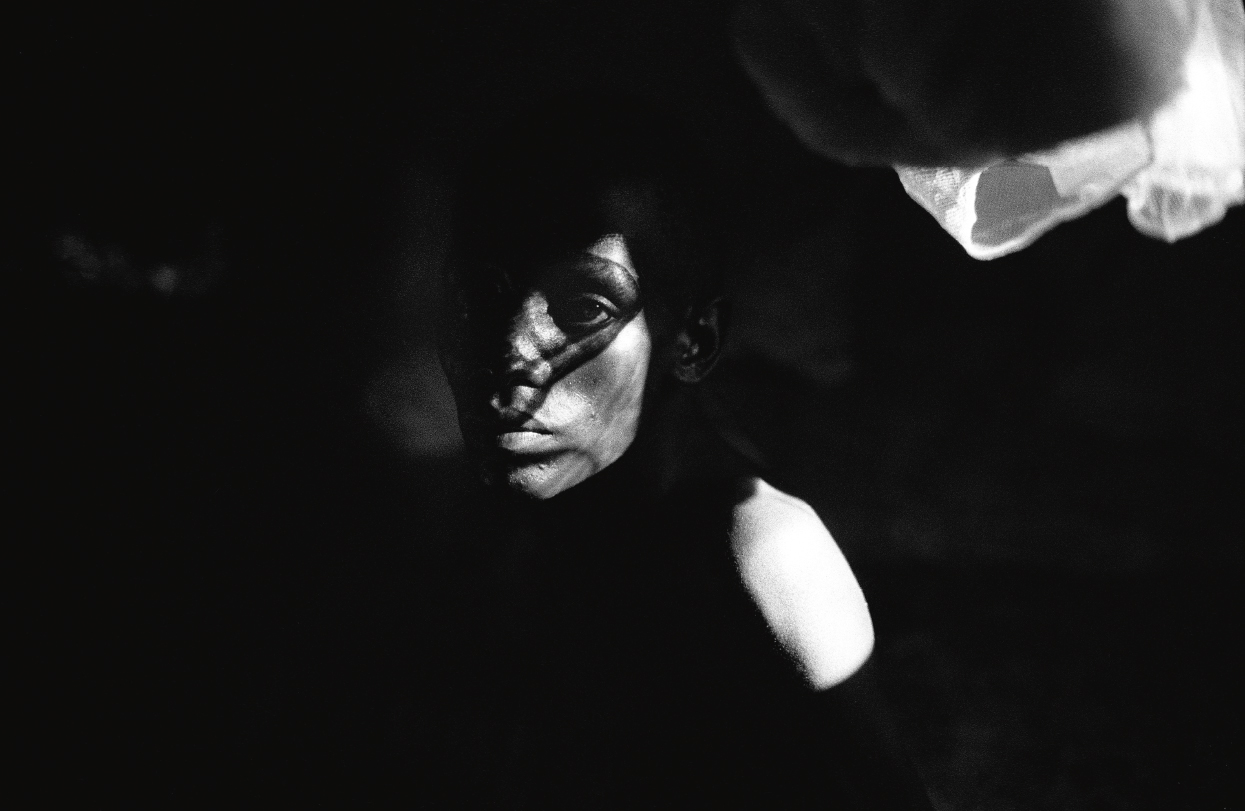
ANTONÍN KRATOCHVÍL: INJUSTICE
Languages: Czech, English, German
Duration: December 9, 2025 – December 9, 2026
A unique collection of 40 photographs from the long-standing body of work by world-renowned photographer Antonín Kratochvíl documents cases of human rights violations, including war crimes and genocide, in the 20th and 21st centuries across various parts of the world. The exhibition also serves as a testament to the extraordinary artistic skills and courage of the photographer. Visitors to the Terezín Genocide Studies Center can also view accompanying videos and short films about the work and life of Antonín Kratochvíl.
Location: Wieser House, Pražská 25, Terezín – entrance from the parking lot by the Information Center. Information Center address for entering into navigation systems: Information Center Retranchement 5, Dukelských hrdinů 43, Terezín
Opening hours:
Monday: closed
Tuesday: for groups by prior appointment
Wednesday: for groups by prior appointment
Thursday: for groups by prior appointment
Friday: 11:00 AM – 4:00 PM
Saturday: 11:00 AM – 4:00 PM
Sunday: 11:00 AM – 4:00 PM
Contact: +420 773 937 864, info@studiagenocid.cz
Admission:
Adults: 160 CZK (group admission for 10 or more people: 150 CZK per person)
Children (ages 10–15), students (ISIC, up to age 26), seniors (over 65): 100 CZK (Group admission for 10 or more people: 90 CZK per person)
Free entrance: teachers and guides
Admission fee includes the permanent exhibition “Crime Without a Name” and Antonín Kratochvíl‘s photography exhibition “Injustice”